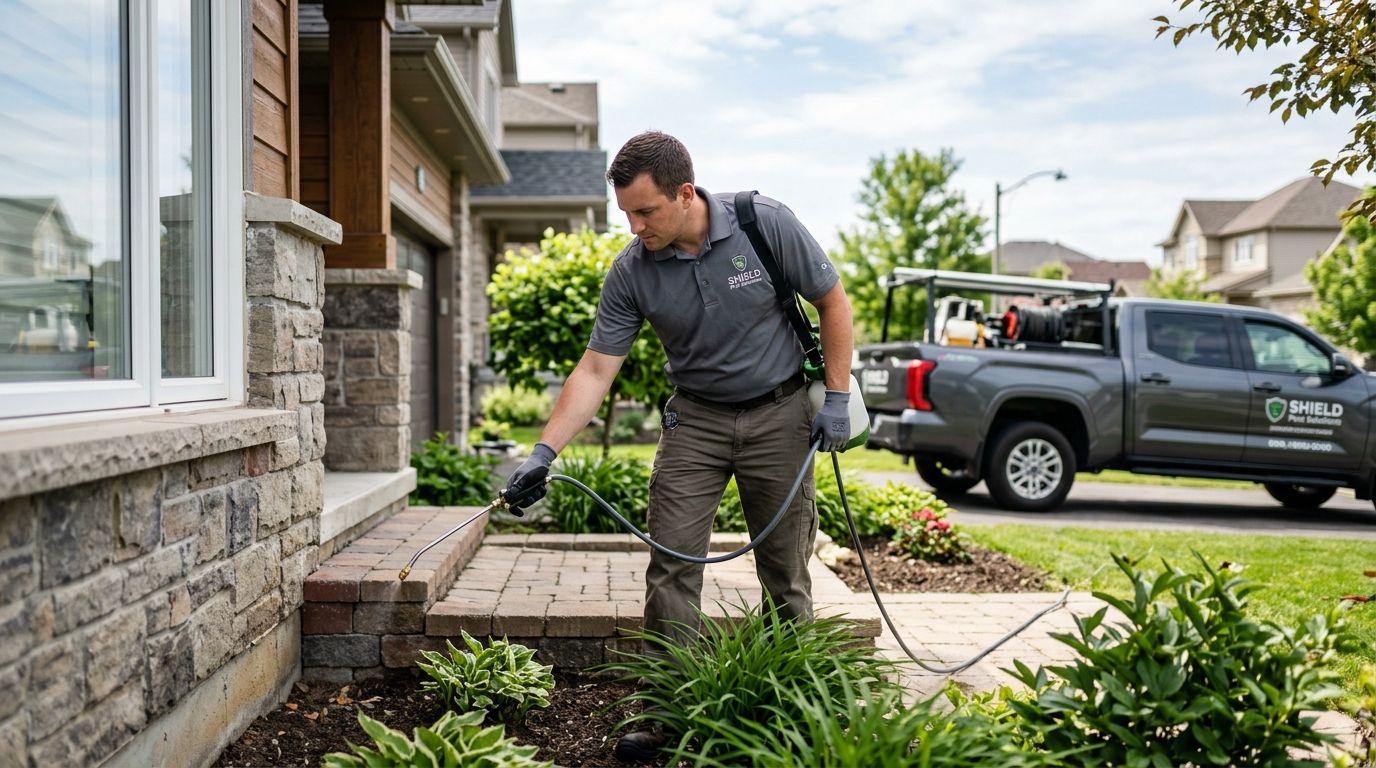
Digital marketing for pest control companies means running local SEO, Google Business Profile optimization, PPC, and review management together to fill service calls in a specific service radius — not brand awareness for its own sake. Pest control is a hyper-local, high-intent category: someone with ants in the kitchen searches "pest control near me" and books whoever answers first with strong reviews and a fast quote. That changes which channels matter and in what order you fund them.
TL;DR
Digital marketing for pest control companies in 2026 runs on local SEO, Google Business Profile, and reviews before any paid channel.
PPC works for pest control because searches are high-intent and seasonal — spring and summer carry the volume.
Multi-location pest control operators need separate local landing pages and review funnels per branch, not one company-wide page.
Email and text follow-up for recurring treatment plans drives more repeat revenue than most new-customer campaigns.
Trifecta Business Group builds and funds the marketing plan together, so cash flow doesn’t stall the campaign mid-quarter.
Why digital marketing matters for pest control companies
Pest control is a trust purchase made under pressure. Homeowners aren't comparison-shopping for a week — they're picking someone in the next 24 to 48 hours, and the decision leans hard on star ratings, proximity, and how fast the phone gets answered. That's why digital marketing for pest control companies has to be built around local intent signals, not generic brand content.
Seasonality also shapes the calendar differently than most home services categories. Termite swarms, ant invasions, and mosquito calls spike in spring and summer, and rodent and stink bug calls climb in fall. A pest control marketing plan that ignores that curve either overspends on PPC in slow months or underfunds it right before demand peaks — which is a cash flow problem as much as a marketing one, and the two are connected more than most owners plan for going into 2026.
Build your local SEO foundation first
Before any paid spend, your Google Business Profile and local landing pages carry the weight. Most pest control searches are "near me" or city-specific, and Google ranks local intent results ahead of national brand pages almost every time.
Claim and fully complete your Google Business Profile with service categories, service area, and photos of trucks and technicians
Create one landing page per city or service area you actually cover, not one generic "areas we serve" page
Collect and respond to every Google review within 48 hours
Add schema markup for local business and service type to your site
Make sure your name, address, and phone number match exactly across your website, Yelp, Angi, and Nextdoor listings
For multi-branch operators, this step gets more complicated fast — a franchise or multi-location pest control company needs a page and profile per branch, each ranking independently in its own market. The mechanics of local SEO for multi-location businesses apply directly here: duplicate content across branch pages tanks rankings for all of them.
Run seasonal PPC campaigns instead of always-on spend
Paid search works for pest control because the searches are transactional — "emergency wasp removal" or "bed bug exterminator" converts at a much higher rate than a display ad ever will. The mistake is running flat budgets year-round instead of matching spend to the seasonal curve.
Build separate ad groups for emergency pests (wasps, bed bugs) versus preventive treatment plans
Set geo-targeting to your actual service radius, not the whole metro area
Use call-only ads during peak season when phone response speed matters more than form fills
Exclude DIY and "how to get rid of" search terms that never convert to a booked job
Track cost per booked service call, not cost per click, as the real success metric
Star rating and review volume are the single biggest factor in whether a homeowner calls you or the next listing down. A pest control company sitting at 3.8 stars is losing bookings to a competitor at 4.6 stars even with an identical price and service area.
Text a review request within two hours of job completion, while satisfaction is highest
Respond to every negative review with a specific resolution, not a generic apology
Feature your review count and average rating directly on service pages, not just a testimonials page
Monitor Yelp, Angi, and Nextdoor in addition to Google — pest control searches happen on all three
Set up retention marketing for recurring treatment plans
Most pest control revenue is recurring — quarterly treatments, annual termite bonds, mosquito season contracts. New-customer acquisition gets all the marketing attention, but renewal and upsell campaigns are cheaper to run and convert at a much higher rate.
Send renewal reminder emails 30 days before a contract lapses
Text customers a service confirmation and technician ETA the morning of every visit
Offer a seasonal add-on (mosquito treatment, rodent exclusion) to existing quarterly customers via email
Segment your list by service type so a termite-only customer doesn't get a general pest offer
Build a marketing budget that matches your service calendar
A flat monthly marketing budget ignores the reality that April through August carries most of the annual call volume for most pest categories. Build the budget around the calendar, not the other way around.
Front-load PPC spend two to three weeks before your seasonal peak starts
Hold a reserve for emergency-pest surge spending (unexpected infestation waves drive short spikes)
Set a fixed floor spend for slow months to keep local rankings and review flow from stalling
Review cost-per-lead monthly and reallocate between SEO, PPC, and reputation spend
Owner time gets pulled from the field during peak season
Freelancer or solo contractor
Companies needing one channel fixed (reviews or PPC only)
No integration between SEO, ads, and reputation management
General marketing agency
Multi-service businesses wanting broad coverage
Rarely understands seasonal pest demand curves or service-area SEO
Trifecta Business Group
Pest control companies scaling locations or funding a campaign push
Full-service model requires a working relationship, not a one-off project
Verdict: for a single-location pest control company under five trucks, DIY local SEO and review requests cover most of the work in 2026 — PPC and multi-location strategy are where outside help pays for itself.
Fund your pest control marketing plan
Talk through funding and marketing options built for service businesses.
Running one generic "service area" page instead of individual city pages, which kills local ranking potential for every location outside headquarters
Cutting PPC spend in slow months entirely instead of holding a floor budget, which lets competitors take the top ad slots right before season starts
Ignoring negative reviews on Yelp and Nextdoor while only monitoring Google, missing where a large share of homeowner research actually happens
Treating recurring customers as done deals with no renewal touchpoints, leaving quarterly and annual contracts to lapse quietly
Scaling PPC spend faster than call center or technician capacity, generating leads the business can't service inside a competitive response window
FAQ
What is the best digital marketing strategy for pest control companies in 2026?
Local SEO paired with active review management is the foundation, with seasonal PPC layered on top during spring and summer demand spikes. Retention email and text campaigns for recurring treatment plans round out the mix.
Is PPC worth it for a small pest control company?
Yes, because pest control searches are high-intent and convert well on call-only ad formats. The key is matching spend to your seasonal call volume instead of running a flat budget year-round.
How important are reviews for pest control marketing?
Reviews are one of the strongest ranking and conversion factors in local pest control search results. A company with more reviews and a higher star average consistently outperforms lower-rated competitors at the same price point.
Do multi-location pest control companies need separate marketing for each branch?
Yes. Each branch needs its own Google Business Profile and local landing page, since duplicate content across locations weakens rankings for all of them.
How much should a pest control company budget for marketing?
Budgets should scale with the seasonal call curve rather than stay flat monthly, front-loading spend two to three weeks before peak season and holding a lower floor spend in slow months.
Can email marketing help retain pest control customers?
Renewal reminders sent 30 days before a contract lapses and seasonal add-on offers to existing customers both drive repeat revenue at a lower cost than new-customer acquisition.
Should pest control companies work with a marketing agency or handle it in-house?
Single-location companies can often manage local SEO and reviews in-house, but PPC management and multi-location strategy typically benefit from outside expertise once the business is scaling.
One last thing
The pest control companies that grow fastest through 2026 aren't the ones spending the most on ads — they're the ones who fixed their review response time and renewal emails first, because those two levers cost almost nothing and compound every month they run.
Digital marketing for insurance agencies in 2026: local SEO, review, and renewal email steps that turn quote traffic into bound policies. See the full playbook.
Digital marketing for B2B service companies in 2026: what to prioritize, what to skip, and how to fund a 90-day push. Practical picks and verdicts inside.
The 7 best marketing strategies for small business growth in 2026, ranked by cost, speed to results, and budget fit for teams that need measurable results.
SEO services for small business owners in 2026: what works, what to skip, and how local search, content, and backlinks fit together for real ranking growth.
A video marketing campaign for small business needs 3-5 videos, a 4-6 week test window, and platform-specific formats. Full 2026 launch steps and costs.