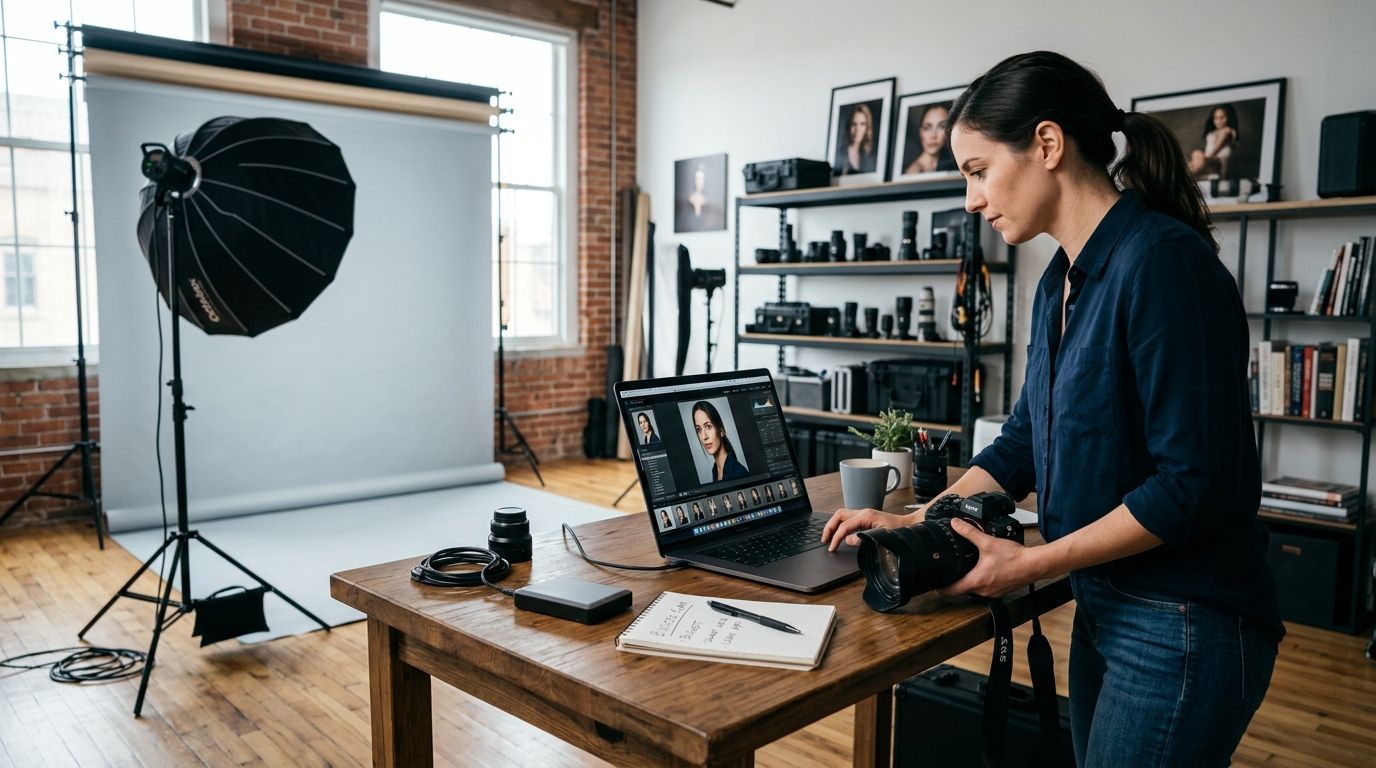
Business loans for photography studios finance camera bodies, lighting rigs, studio leases, and the cash gap between a June wedding shoot and the August invoice payout. Photography is a project-based, seasonal business — funding decisions have to match a revenue pattern that spikes around weddings, graduations, and holiday portraits, then goes quiet for months.
TL;DR
Business loans for photography studios range from SBA term loans to equipment financing to working capital lines, each suited to a different cash need.
Equipment financing typically runs 24 to 84 months and matches camera, lighting, and studio gear to its useful life.
SBA loans generally require a credit score of 640 or higher, making them a slower but cheaper option for established studios.
Working capital loans and lines of credit smooth the gap between peak wedding season and slow winter months.
Trifecta Business Group matches the funding type to the studio’s revenue cycle, not the other way around.
Why business loans for photography studios matter
A photography studio's revenue doesn't arrive on a monthly schedule — it arrives in bursts tied to booking cycles. Wedding and portrait season typically runs from May through October in most U.S. markets, with a second smaller spike around the winter holidays. The months in between carry fixed costs — studio rent, retouching software, assistant pay — with a fraction of the incoming revenue.
That mismatch is the core funding problem for a photography studio, not a lack of demand. A studio can be fully booked through October and still be short on cash in February. Business loans for photography studios exist to bridge that gap and to fund the equipment that keeps a studio competitive — full-frame bodies, studio strobes, backdrop systems, and editing hardware that depreciate faster than most owners expect.
Studios that treat funding as an emergency move end up with the most expensive capital available. Studios that plan for the cycle get better terms because they apply before the crunch, not during it. That single distinction shapes everything below.
For the full landscape before narrowing to photography-specific tactics, the business funding options guide covers what studios choose from in 2026.
Map your studio's cash flow cycle before you apply
Start with the manual, no-cost step: lay out twelve months of actual bookings and payouts, not projected ones. Most studios already have this data sitting in booking software or invoicing records — it just hasn't been turned into a funding decision yet.
Chart monthly revenue for the last 24 months to find the real slow months, not the assumed ones
Separate deposit income from final-payment income, since final payments often lag the shoot by 30 to 60 days
Flag fixed costs that don't flex with revenue: rent, insurance, software subscriptions
Identify the single lowest cash month in the cycle — that's the number a lender will ask about
Note recurring corporate or school contracts that smooth the seasonal dip
Separate equipment spend from operating cash needs
These are two different funding problems and lenders underwrite them differently. Equipment has resale value and a defined useful life, so a lender can secure a loan against it. Operating cash — payroll, rent, retouching contractors — carries no collateral, so it gets priced differently.
List every piece of gear over $1,000 in current value: bodies, lenses, lighting, backdrops, computers
Estimate remaining useful life on each item; most digital bodies see 4 to 6 years of primary studio use
Separate one-time buildout costs (walls, flooring, cyclorama) from recurring operating costs
Total your monthly fixed operating cost independent of revenue
Set a rolling three-month cash reserve target based on your lowest historical month
Get equipment financing matched to your gear's lifespan
Once equipment needs are itemized, financing them separately from operating cash almost always costs less than folding gear into a general working capital loan. Equipment financing terms typically run 24 to 84 months, aligned to how long the gear stays useful in a working studio.
Get vendor quotes in writing first — lenders finance against the actual invoice, not an estimate
Compare financing against a lease if your gear turns over every 2 to 3 years
Check whether the lender allows a bundled purchase (body plus lenses plus lighting) as one line item
Confirm the term doesn't outlast resale value; an 84-month note on a body you'll replace in 48 months creates negative equity
Ask whether older gear can serve as trade-in credit toward the down payment
This is where most photography studios pick the wrong product. A studio booked solid May through October that needs cash in January doesn't have a growth problem — it has a timing problem, and timing problems call for working capital, not a term loan sized for equipment.
Calculate the actual off-season shortfall using the twelve-month chart from step one
Apply before the slow season starts, not after the balance drops
Choose a revolving line over a lump sum if the shortfall varies year to year
Match repayment to the revenue curve; some lenders offer seasonal or step-down structures
Tie the amount to the real gap, not a round number
Studios lose weeks because they gather documents after applying instead of before. A photography studio's books look different from a retail or recurring-service business — most revenue is project-based with deposits — and an underwriter needs that context up front.
Pull the last 12 to 24 months of bank statements and profit-and-loss reports
Break out deposit revenue from final-payment revenue in your bookkeeping
Have two years of business tax returns ready, not just personal returns
List current debts and monthly obligations, including existing equipment leases
Write a one-paragraph explanation of your seasonal cycle for the underwriter — it answers the question before it's asked
Compare your funding options by studio stage
A first-year studio with no track record qualifies for different products than a studio with five years of tax returns and steady bookings. Matching option to stage saves time and avoids rejections.
Option
Best for
Key limitation
SBA term loan
Established studios buying a building or funding a full buildout
Slower approval; generally needs a credit score of 640 or higher
Equipment financing
Camera, lighting, and studio gear purchases
Covers itemized equipment only, not payroll or rent
Working capital loan
Bridging the gap between peak and slow season
Shorter repayment window than a term loan
Business line of credit
Ongoing flexibility across an unpredictable booking calendar
Requires discipline to avoid treating it as revenue
Merchant cash advance
Studios with strong card-based deposit volume needing fast cash
Costs more than a term loan or line of credit
Verdict: a studio buying a building or doing a full buildout should look at an SBA term loan first; a studio smoothing seasonal cash gaps should start with a working capital loan or line of credit, not a merchant cash advance.
Get funding built for your studio’s cycle
Equipment financing and working capital for photography studios, matched to your booking calendar.
Common mistakes photography studios make with funding
Financing camera bodies with a merchant cash advance instead of equipment financing. Gear has resale value and qualifies for cheaper, longer-term products.
Sizing a working capital loan around a round number instead of the real off-season gap. Over-borrowing adds repayment pressure in the exact months cash is already tight.
Mixing personal and business credit for equipment purchases. It muddies the financial history a lender needs to see and makes the next application harder to underwrite.
Applying in the middle of the slow season. Waiting until the crunch hits means fewer options and worse terms; the application belongs before the dip.
Skipping the seasonal explanation on the application. A studio that doesn't explain its booking cycle looks financially inconsistent to an underwriter who only sees monthly swings.
Business loans for photography studios work best when the product matches the actual cash pattern — not whichever loan is easiest to find. In 2026, studios that separate equipment financing from working capital, and apply ahead of the slow season, land better terms than studios reacting to a shortfall in real time. Trifecta Business Group builds funding around that cycle rather than forcing a studio into a single product.
FAQ
What are the best business loans for photography studios in 2026?
Equipment financing works best for cameras and lighting, while working capital loans or a business line of credit cover the gap between peak wedding season and slow winter months. Studios buying or renovating a physical space typically look at SBA term loans first.
Can a new photography studio qualify for a business loan?
A new studio with limited history usually qualifies for equipment financing tied to the gear’s resale value more easily than an unsecured working capital loan. Lenders generally want bank statement history plus a clear explanation of the booking cycle.
How much equipment financing can a photography studio get?
Equipment financing amounts are tied to the value of the itemized gear being purchased, with terms running 24 to 84 months depending on useful life. A vendor quote or invoice is usually required before the loan is finalized.
Is a merchant cash advance a good option for photography studios?
A merchant cash advance can work for a studio with strong card-based deposit volume that needs cash fast, but it costs more than a term loan or line of credit. Use it as a short-term bridge, not a repeat funding source.
What credit score do I need for an SBA loan as a photography studio owner?
SBA loans generally require a credit score of 640 or higher, plus two years of business tax returns and consistent bank statement history. Studios with a shorter track record often start with equipment financing instead.
How do photography studios handle cash flow during the slow season?
Most studios bridge the off-season with a working capital loan or revolving line sized to the actual historical shortfall, not a round number. Applying before the slow season starts, rather than during it, generally produces better terms.
Should a photography studio finance equipment or pay cash?
Financing preserves cash for the operating costs that carry through the slow months, while paying cash upfront ties up reserves needed for rent and payroll. Most established studios finance major gear and keep cash for operations.
One last thing
The studios that get the best terms in 2026 aren't the busiest ones — they're the ones that apply in September with a full booking calendar behind them instead of in February with a thin bank balance. Same studio, same revenue, very different underwriting file. Time the application to the calendar, not the crisis.
Business funding for import export companies in 2026: PO financing, factoring, AR lines and SBA export loans compared, plus how to build a trade-cycle funding stack.
Startup business loans for entrepreneurs in 2026: compare SBA loans, lines of credit, and MCAs, plus the prep steps first-time founders skip before applying.
Business loans for moving companies compared for 2026: equipment financing, working capital, SBA loans, and factoring, with a clear pick for seasonal cash flow.
PPC advertising for small business owners works best with a capped budget and one platform. See the 2026 setup steps, comparison table, and common mistakes.