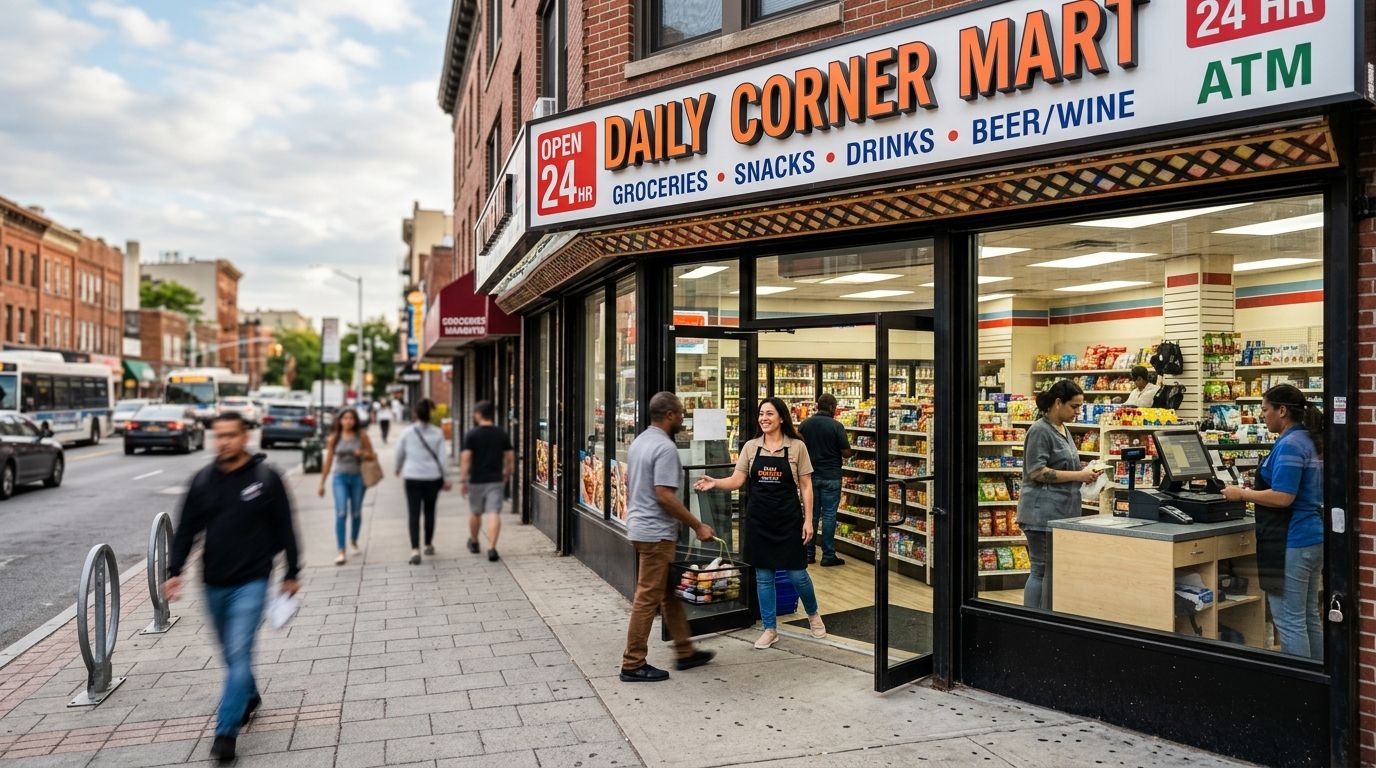
Funding solutions for convenience stores solve a specific cash flow problem: thin margins on fuel and tobacco, fast inventory turnover on snacks and beverages, and seasonal swings tied to weather, gas prices, and local traffic patterns. A single-location convenience store owner needs capital that moves as fast as the shelves turn — not a six-month underwriting process built for a company with a finance department.
TL;DR
Funding solutions for convenience stores work best when matched to a specific gap: inventory, equipment, or expansion, not a lump ‘business loan.’
Working capital loans and merchant cash advances fund fastest; SBA loans cost less but take longer to close.
Trifecta Business Group structures funding around cash flow cycles specific to c-store operators, not generic retail underwriting.
Stacking multiple cash advances is the single most common mistake that sinks convenience store margins in 2026.
Why funding solutions for convenience stores matter
A convenience store runs on inventory velocity, not big-ticket sales. When a distributor raises minimum order sizes or a cooler goes down mid-summer, the gap between payables and receivables closes fast — often within days, not weeks. Store owners searching for working capital loans for retail stores are usually reacting to one of three triggers: a restock they can't cover, a piece of equipment that failed, or an opportunity to add a second location before a competitor does.
What makes this segment different from general retail is the frequency of the cash need. A boutique might finance once a year for seasonal inventory. A convenience store owner may need capital access every quarter, sometimes every month, because margins on individual SKUs are small and volume is everything. That changes which funding products actually fit.
Calculate your true funding gap before you apply
Most convenience store owners apply for funding based on a round number, not a calculated need. That leads to over-borrowing on high-cost products or under-borrowing and having to reapply within 90 days.
Pull 90 days of bank statements and separate fuel margin from inside-sales margin
Identify your average days of inventory on hand for top-selling categories (tobacco, beverages, snacks)
Add a buffer for one missed delivery cycle, not just the base restock cost
Separate recurring gaps (payroll, utilities) from one-time gaps (equipment, buildout)
Run the number past a lender before applying so the ask matches the actual shortfall
Clean up your credit profile first
Most convenience store financing still weighs personal credit alongside business credit, especially for single-location owners without years of established business history.
Pull your personal credit report and dispute any errors before applying
Check your business credit file if you've had an EIN and vendor accounts for 12+ months
Pay down revolving balances below 30% utilization where possible
Resolve any past-due vendor accounts that show on business credit
Avoid new credit inquiries in the 60 days before a funding application
Match the funding type to the actual use case
A line of credit and a term loan solve different problems. Convenience store owners lose money by using the wrong tool for the job — running an equipment purchase through a high-cost advance, for example, when a term product would carry lower payments.
Use short-term working capital for inventory restocks and seasonal buildup
Use equipment financing for coolers, POS systems, and fuel pump upgrades
Use a term loan for renovations, remodels, or adding a second register lane
Use inventory financing when a bulk purchase discount only pencils out with upfront cash
Reserve a revolving line of credit for recurring gaps like payroll or utility spikes
Gather documents before you need them
Slow document turnaround is the number one reason convenience store funding applications stall past the point where the capital is still useful.
Last 3-6 months of business bank statements
Most recent business tax return
A current profit and loss statement, even if informal
Lease agreement or proof of location control
Vendor and distributor account statements showing payment history
Compare funding options side by side, not one at a time
Applying to one lender at a time wastes weeks. Convenience store owners get better terms comparing structured options against each other before committing.
Compare repayment structure: fixed term vs. daily/weekly debit vs. revolving draw
Compare total cost of capital, not just the headline rate
Compare how each option reports to business credit bureaus
Compare renewal terms if you expect to need capital again within a year
Ask each lender directly how they treat a missed or short day of sales
Apply strategically and avoid stacking
Stacking multiple merchant cash advances is the fastest way to turn a manageable cash gap into a structural problem. Each additional advance adds a daily or weekly debit on top of the last one, and convenience store margins rarely absorb more than one active repayment obligation at a time.
Apply to one funding source at a time and let it fully fund before seeking more
Read the reconciliation terms so you know how repayment adjusts to slow sales days
Ask directly whether the lender allows other active advances — some prohibit it
The first funding round for a convenience store is almost always the hardest. Every subsequent round gets easier and cheaper if the store owner uses the time between rounds to build a credit file.
Open trade lines with distributors that report to business credit bureaus
Keep a business credit card active and paid down monthly
Separate personal and business finances completely, including a dedicated business bank account
Monitor your business credit file quarterly for errors or missed reporting
Comparing funding options for convenience stores
Funding Option
Best For
Key Limitation
Working capital loan
Restocking fast-moving inventory between distributor deliveries
Fixed repayment regardless of a slow sales week
Merchant cash advance
Owners needing cash within days with limited collateral
Daily or weekly debits compress already-thin margins
Inventory financing
Bulk purchases of tobacco, beverages, or snacks at volume pricing
Lender often requires the inventory itself as collateral
SBA loan
Buying real estate or acquiring a second store location
Longer approval timeline, heavier documentation
Business line of credit
Recurring gaps like payroll or seasonal utility spikes
Credit limit typically scales with time in business
The best working capital loans for seasonal businesses guide breaks down how repayment timing should track sales cycles, which matters for convenience stores near tourist routes, ski areas, or seasonal job sites where foot traffic swings by month.
Common mistakes convenience store owners make
Borrowing against fuel margin instead of inside-sales margin — fuel margins are volatile and can turn negative in a bad pricing week, leaving no cushion for a fixed repayment.
Stacking two or three cash advances at once — each additional advance adds a repayment obligation that compounds against the same daily deposit.
Financing equipment with short-term working capital — a cooler or fuel pump upgrade should carry a term structure matched to its useful life, not a 90-day payback.
Applying without 90 days of clean bank statements — NSF fees and overdrafts in recent statements are the fastest way to get declined or repriced.
Ignoring how a distributor rebate program interacts with financed inventory — some volume discounts aren't worth the financing cost once fees are factored in.
Get funding built for c-store cash flow
Talk to Trifecta Business Group about a funding structure that fits your restock and margin cycle.
What are the best funding solutions for convenience stores in 2026?
Working capital loans and inventory financing fit most convenience store needs in 2026 because they match short inventory cycles. Merchant cash advances work when speed matters more than cost, and SBA loans fit larger moves like buying real estate or a second location.
How fast can a convenience store get approved for funding?
Working capital loans and merchant cash advances can fund within days once bank statements and basic financials are submitted. SBA loans and larger term loans typically take several weeks due to documentation requirements.
Is a merchant cash advance a good fit for a convenience store?
A merchant cash advance fits a convenience store that needs cash fast and lacks collateral, but the daily or weekly debit structure cuts into thin margins. It works best as a one-time bridge, not a recurring funding source.
Can a convenience store get inventory financing for bulk purchases?
Yes, inventory financing lets convenience stores buy tobacco, beverage, or snack inventory in bulk to hit distributor volume pricing. The inventory itself often serves as collateral, which can limit how the funds are used elsewhere.
What credit score does a convenience store need for funding?
Requirements vary by lender and product, but a cleaner personal and business credit file gets better terms across every funding type in 2026. Store owners with credit issues still have options through working capital and cash-advance products, just at a higher cost.
Should a convenience store use a business line of credit or a term loan?
A line of credit fits recurring gaps like payroll or seasonal utility spikes because it’s revolving. A term loan fits one-time needs like a remodel or new equipment because the payment schedule matches a fixed payoff date.
How much funding does a convenience store typically need?
The right amount depends on the actual gap: a restock cycle, an equipment failure, or a location expansion, not a flat number. Calculating 90 days of cash flow before applying prevents over-borrowing on high-cost products.
Can a new convenience store owner qualify for funding?
New owners without 12+ months of business history typically qualify through personal credit-based products or equipment financing tied to the asset itself. Building a business credit file early makes the next funding round easier to qualify for.
One last thing
The convenience store owners who avoid trouble in 2026 aren't the ones who never borrow — they're the ones who never carry more than one active repayment obligation at a time. Sequence your funding, don't stack it, and the daily debit on your register tape stays manageable instead of becoming the reason the store closes early on a slow Tuesday.
Compare the best business funding options for small business owners in 2026 — SBA loans, working capital, equipment financing, ranked with clear verdicts.
Business loans for catering companies in 2026: working capital, equipment financing, invoice factoring, and SBA options matched to your booking calendar.
How to qualify for a working capital loan in 2026: credit score, revenue benchmarks, required documents, and the fastest path from application to funding.
Funding solutions for solar installation companies in 2026: equipment financing, working capital, and credit lines matched to the 60-90 day install-to-payout gap.
Compare working capital loans for retail stores in 2026 — lines of credit, MCAs, inventory financing, and SBA loans, ranked with clear Buy/Consider/Skip verdicts.