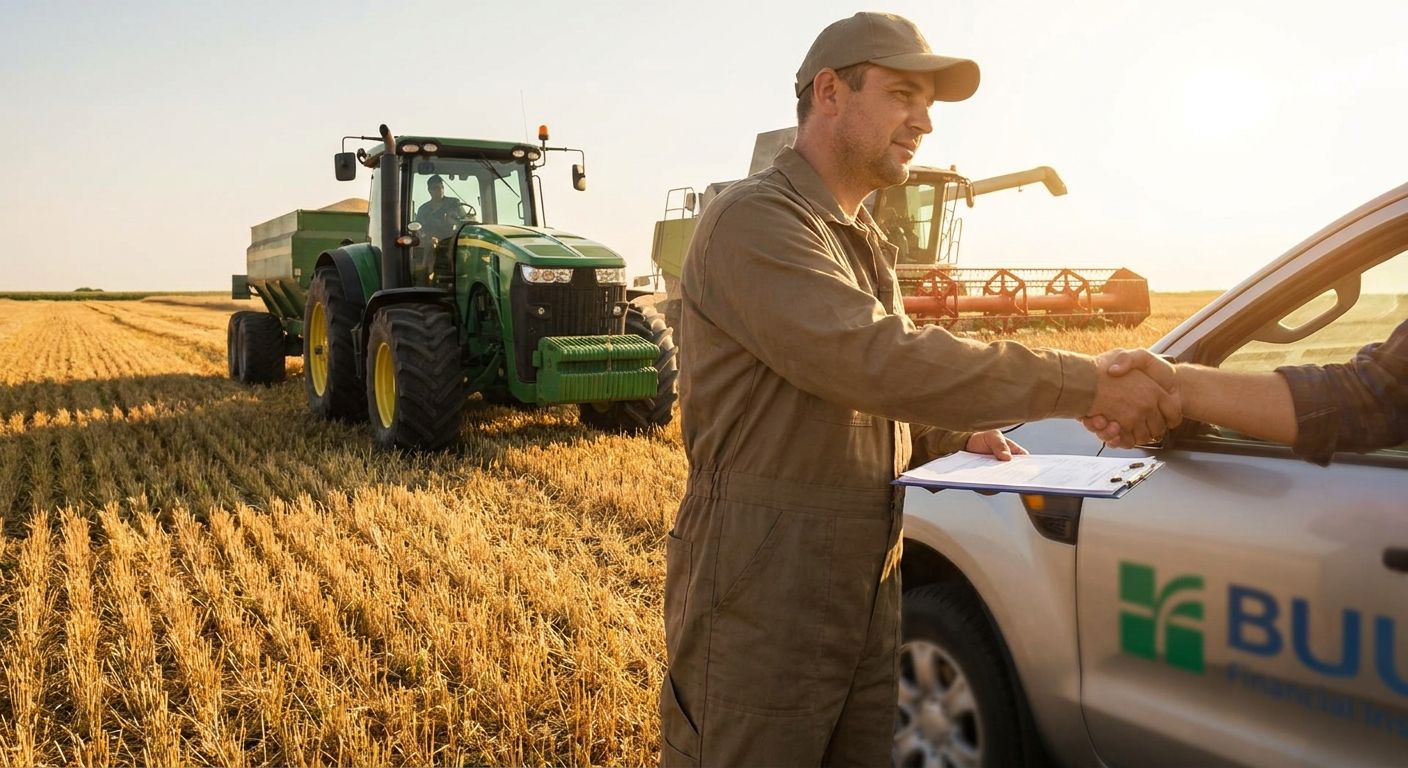
Farm equipment financing is a funding structure that lets agricultural operations buy tractors, combines, sprayers, irrigation systems, and other capital equipment without draining cash reserves at the start of a growing season. The structure that works for a row-crop operation with one harvest a year looks nothing like what works for a dairy running equipment year-round, so payment schedules, collateral terms, and lender type all shift by segment.
TL;DR
Equipment financing for farms works best when payments are timed to harvest income, not calendar months.
SBA 7(a) loans, bank term loans, and equipment-specific lenders all serve agricultural equipment purchases in 2026, each with different collateral rules.
Leasing preserves cash for input costs; buying builds equity in equipment that holds resale value.
A working capital cushion alongside the equipment loan prevents an off-season cash crunch.
Why equipment financing matters for farms
Farm income doesn't arrive monthly. It arrives in concentrated windows tied to planting, harvest, or livestock cycles, and a standard 12-equal-payment loan built for a retail business ignores that reality entirely. Equipment financing for farms exists because a combine or a grain dryer can cost more than an entire year of operating revenue, and few operations can pay cash for that without stalling every other part of the business.
The collateral side matters too. Agricultural equipment holds resale value differently than office or restaurant equipment — a well-maintained tractor can retain a meaningful share of its value for a decade, which is exactly why lenders treat it as strong collateral and often extend longer terms than they would for other industries. That's a real advantage for farm operators who understand it and negotiate for it.
Misreading this dynamic is the most common reason farms end up in equipment financing that doesn't fit their cash flow — a 36-month term built for a manufacturer's monthly revenue gets applied to an operation that gets paid twice a year.
Match loan structure to your harvest cycle
Start with your revenue calendar before you talk to any lender. A payment schedule that ignores when money actually arrives creates pressure in the months you can least afford it.
Map out the months your operation actually receives payment — crop sales, contract milk checks, livestock sales
Request seasonal or annual payment structures instead of standard monthly amortization
Ask each lender directly whether they offer harvest-timed or deferred first-payment options
Build a 60 to 84-month term into your planning if the equipment has a long useful life, since shorter terms strain seasonal cash flow
Confirm whether the lender allows a payment skip during known off-months
Gather the paperwork lenders actually ask for
Agricultural lenders ask for more than a standard business loan application because farm income is harder to verify from tax returns alone. Get this together before you apply, not after a lender asks for it a second time.
Two to three years of farm tax returns (Schedule F) or business financials
Current balance sheet showing existing equipment, land, and debt
Crop insurance records or livestock inventory counts as supporting collateral documentation
A written equipment quote from the dealer, not just a make and model
Proof of any existing liens on land or equipment already pledged elsewhere
Compare SBA, bank, and alternative equipment lenders
Three lender types dominate agricultural equipment financing in 2026: banks with farm lending desks, SBA-backed programs, and equipment-focused alternative lenders. Each fits a different credit profile and urgency level.
A community or regional bank with an ag lending division for operations with 2+ years of financials and clean credit
SBA loan programs for operations that want longer terms and lower down payments — the SBA 7(a) program caps loans at $5 million
Equipment-specific alternative lenders when speed matters more than the lowest rate
Manufacturer or dealer financing arms, which sometimes move faster but carry less flexible terms
A funding consultant who can shop multiple lenders at once instead of applying serially
This is where working with a firm that structures the application across several lender types saves weeks — Trifecta Business Group positions farm operators with the lender type that matches their credit file and timeline instead of a single application sent to one bank.
Build a working capital cushion for the off-season
An equipment loan alone doesn't solve a cash flow gap between planting costs and harvest revenue. Pair the equipment purchase with a separate working capital plan so a slow month doesn't turn into a missed equipment payment.
Set aside a reserve equal to at least one off-season's worth of fixed costs
Separate the equipment loan account from the operating account so one shortfall doesn't cascade into the other
Revisit the cushion size every planting season as input costs shift
Weigh buying against leasing for depreciating equipment
Buying builds equity; leasing preserves cash for seed, feed, and fuel. Neither is universally right, and the decision depends on how fast the specific piece of equipment loses value and how often your operation upgrades.
A combine or planter that gets replaced every 5 to 7 years often makes more sense leased, since the residual value risk shifts to the lessor. A tractor that stays in the fleet for 15 years usually makes more financial sense purchased outright, because ownership captures the resale value at the end of its life instead of handing it back. The same logic applies to farm equipment as it does to construction or landscaping fleets weighing whether to hire or buy equipment for a single-season job versus a piece of machinery in daily use for a decade.
Verdict: lease equipment that turns over fast, buy equipment that stays in the fleet for a decade or more.
Negotiate residual value and payment timing before you sign
The terms you negotiate matter as much as the lender you pick. A lower rate with a bad residual clause can cost more than a slightly higher rate with flexible timing.
Ask for the residual value figure in writing before signing a lease, not after
Negotiate a deferred first payment tied to your next harvest, not the loan origination date
Request a prepayment option with no penalty if a strong harvest lets you pay down early
Confirm whether the equipment can be traded mid-term without triggering a balloon payment
Time your application to the planting or harvest calendar
Applying for equipment financing 60 to 90 days before you need the equipment gives lenders time to underwrite and gives you leverage to compare offers instead of taking the first approval. Applying during your busiest field season, when you can't respond quickly to document requests, slows the process down and can push a purchase past the planting window entirely.
Fast-depreciating equipment replaced every 5-7 years
No equity built; mileage or hour caps may apply
Dealer/manufacturer financing
Convenience at point of sale
Less room to negotiate rate or term
Common mistakes farms make with equipment financing
Matching payment schedules to the calendar instead of the harvest. A monthly payment plan built for retail cash flow doesn't fit an operation paid twice a year.
Pledging land as collateral when equipment alone would qualify. This ties up assets that could secure a separate loan later.
Skipping the working capital cushion entirely. The equipment payment is manageable; the surprise off-season expense next to it isn't.
Applying during the busiest field season. Slow document turnaround stretches underwriting and can miss the planting window.
Signing a lease without confirming the residual value figure. That number determines the real cost of the lease, not the monthly payment alone.
Get farm equipment financing structured right
Apply in minutes or talk to a funding specialist about your operation.
Equipment financing for farms is a loan or lease structured around agricultural cash flow, used to buy tractors, combines, irrigation systems, and other capital equipment. Payments are often timed to harvest or contract income rather than a standard monthly schedule.
Is SBA financing better than a bank loan for farm equipment?
SBA 7(a) loans offer longer terms and lower down payments, up to $5 million, but take longer to underwrite than a direct bank loan. A bank term loan moves faster for operations with strong existing financials.
Should a farm lease or buy equipment?
Lease equipment that gets replaced every 5 to 7 years, since the lessor absorbs the resale risk. Buy equipment that stays in the fleet for a decade or more, since ownership captures the resale value at the end of its life.
How long are farm equipment loan terms?
Farm equipment loans commonly run 60 to 84 months depending on the equipment’s useful life. Longer terms suit high-value machinery like combines; shorter terms suit equipment that turns over faster.
What documents do lenders need for farm equipment financing?
Lenders typically ask for two to three years of Schedule F tax returns or farm financials, a current balance sheet, a written dealer quote, and proof of any existing liens on land or equipment.
Can a new farm operation qualify for equipment financing?
Newer operations qualify more often through equipment-specific alternative lenders or dealer financing than through bank term loans, which usually require two or more years of financials.
Does equipment financing affect farm working capital?
An equipment loan payment competes with input costs for cash during the off-season unless a separate working capital reserve is built alongside it.
When should a farm apply for equipment financing?
Apply 60 to 90 days before the equipment is needed. Applying during peak field season slows underwriting and risks missing the purchase window.
One last thing
The detail most farm operators skip is negotiating the first payment date separately from the loan closing date — a lender who agrees to defer the first payment 60 or 90 days past closing effectively hands you a free cash flow buffer through the next planting cycle, and most lenders won't offer it unless you ask directly in 2026.
Equipment financing for manufacturers in 2026: compare term loans, leasing, SBA loans, and sale-leaseback with clear buy or skip verdicts for your shop.