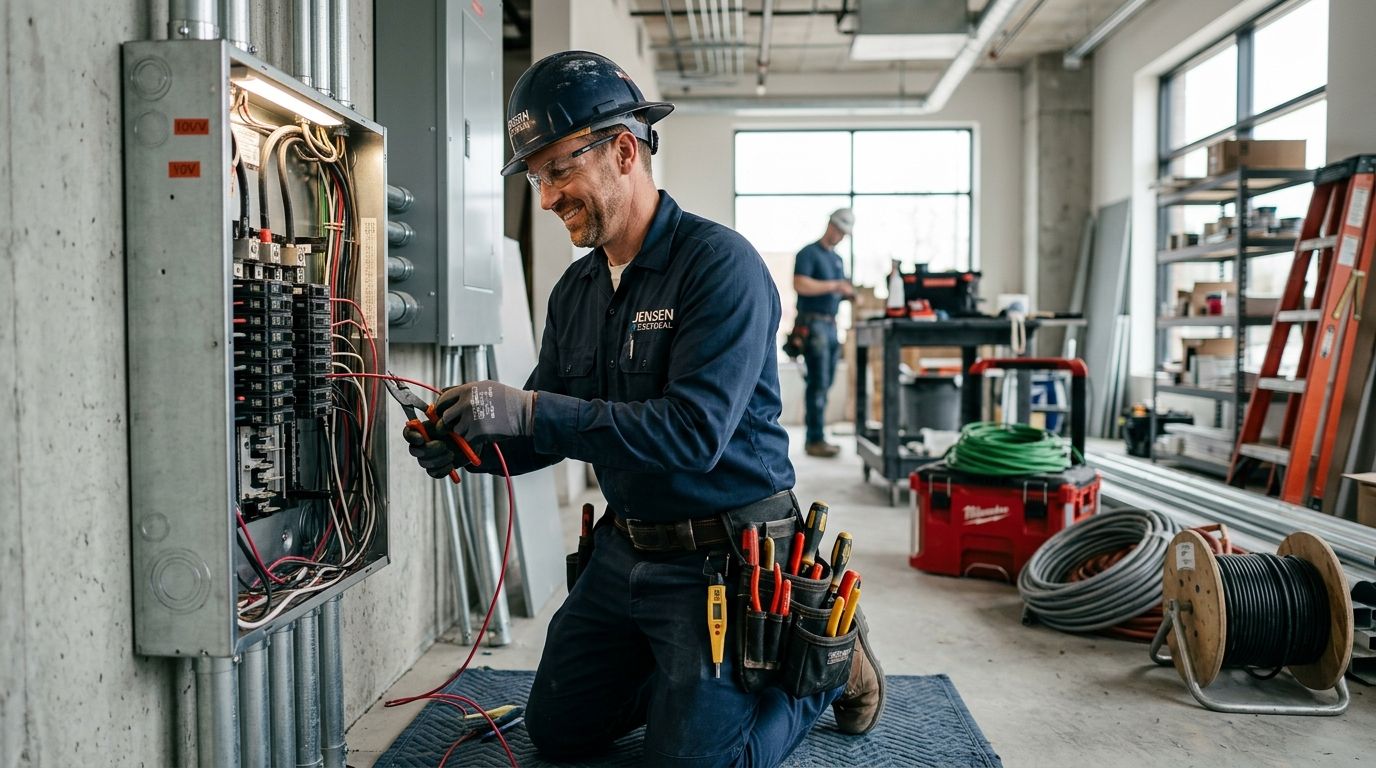
Business funding for electrician businesses is capital secured specifically to cover the swings between bidding a job, buying material, and getting paid net-30 or net-60 once the work is done. Electrical contractors carry unusual cash flow risk: payroll and permit fees hit before the customer or general contractor pays, and a single large commercial job can tie up working capital for months. The right funding fills that gap without stalling the next bid.
TL;DR
Business funding for electricians works best when matched to the gap it’s covering: payroll vs. equipment vs. growth capital.
Term loans and SBA loans fit long-term buys like trucks and bucket lifts; lines of credit fit payroll and material float.
Electricians with under two years in business still qualify through revenue-based and equipment-backed options in 2026.
Building a business credit profile before you apply gets better terms than applying cold after a cash crunch hits.
Why funding matters for electricians
Electrical contractors run on delayed payment cycles that most funding products weren't originally built for. A residential service call pays out fast; a commercial tenant-improvement job can hold retainage for 60 to 90 days after the final inspection. That lag is why so many electrician businesses that are otherwise profitable on paper still miss payroll in a given month.
General contractors and electrical subs share this pattern closely enough that funding built for construction contractors applies almost directly to electricians: both need capital that bridges the time between material purchase and client payment, not just a lump sum for growth. That distinction changes which product actually fits.
Diagnose your cash flow gap first
Before applying anywhere, figure out whether you're short on payroll cash, material cash, or growth cash — they call for different products.
Pull the last 90 days of bank statements and mark every payroll date against every deposit date
Note the average number of days between invoicing a job and getting paid
Separate recurring service revenue from one-off commercial project revenue
Flag the specific month(s) in 2026 where the account ran thinnest
Calculate what a 30-day cushion would cost you in dollars, not vibes
Separate equipment costs from working capital needs
A new bucket truck or a wire pulling machine is a different funding conversation than covering three weeks of payroll. Mixing the two on one loan usually means paying for equipment on terms that are too short, or funding payroll on terms that are too long.
List every planned equipment purchase for the next 12 months with rough cost ranges
Check whether the equipment itself can secure the loan (lowers the rate)
Separate one-time purchases from recurring consumables like wire, conduit, and breakers
Confirm depreciation timelines match the loan term, not just the monthly payment
Build your business credit profile
Most electrician businesses operate for years under the owner's personal credit because nobody set up a separate business file. That habit caps what you can qualify for right when you need more.
Register for a D-U-N-S number if you haven't already
Open trade lines with material suppliers who report to business credit bureaus
Keep a business bank account separate from personal, with no commingled deposits
Pay existing business obligations on terms, not early and not late
Pull your business credit report annually and dispute errors immediately
Choose the right funding structure for your growth stage
An electrician doing $400,000 a year in mostly residential service calls needs a different structure than one bidding $2 million commercial jobs. This is where most owners either overborrow or underborrow.
Match loan term length to how long the underlying asset or project lasts
Use a business line of credit for recurring payroll and material gaps you can draw and repay repeatedly
Reserve term loans for one-time capital needs like a second crew's equipment
Treat any funding tied to daily or weekly repayment as a short-term bridge only
Talk through structure with a consultant before applying, not after getting an offer
Prepare your application package
Lenders evaluating electrical contractors in 2026 want to see contract backlog and licensing status, not just tax returns. A thin package gets a thin offer or a decline.
Gather 12 months of bank statements and the last two years of business tax returns
Pull a current accounts receivable aging report showing what's owed and by whom
Document your state electrical contractor license and any bonding in place
List signed contracts or purchase orders on the books, even unfinished ones
Have a one-page summary of what the funding will be used for, with a number attached
Compare offers before you sign
Two offers with the same monthly payment can carry very different total costs once term length and fees are factored in. Read the full repayment schedule, not just the payment amount.
Confirm whether the rate is fixed or tied to a factor that can move
Check for prepayment penalties if you plan to pay it off early from a big job
Ask what happens to the rate or terms if a payment is late
Compare total repayment cost across offers, not just the monthly number
Get every verbal promise from the lender in writing before signing
Reinvest funding into the right priorities
Funding that goes toward the wrong priority just delays the same cash crunch six months later. Electricians who get the most out of funding put it against whatever actually removes the bottleneck.
Fund the crew and equipment needed to take the next job size up, not just "more of the same"
Cover payroll gaps only as a bridge, never as a standing habit
Put a portion toward marketing if lead flow, not cash timing, is the real constraint
Track return on the specific dollars spent, job by job, for 90 days after funding
Funding options compared for electrician businesses
Option
Best for
Key limitation
SBA 7(a) loan
Established electricians buying trucks, tools, or a second location
Paperwork-heavy, slower approval timeline than most contractors want
Business line of credit
Recurring payroll and material gaps between jobs
Credit limit tied closely to time in business and revenue history
Equipment financing
A specific truck, lift, or tool purchase
Only covers the equipment itself, not payroll or overhead
Term loan
One large, defined capital need like a second crew build-out
Fixed schedule regardless of seasonal job flow
Invoice factoring
Electricians waiting 60-90 days on commercial retainage
Cost scales with how long the invoice sits unpaid
Verdict: most electrician businesses need a line of credit for the recurring payroll gap and a separate, smaller product for equipment — trying to solve both with one loan is the most common structural mistake.
Common mistakes electricians make with funding
Applying only when cash is already tight — approval odds and rates are both worse under pressure than they are 60 days ahead of the crunch
Funding payroll with equipment-term debt — a five-year loan for a two-week payroll gap means paying interest on money you didn't need that long
Skipping the business credit file — running everything through personal credit for years caps the funding ceiling right when a bigger job needs a bigger line
Not separating residential and commercial cash cycles — a business running both should track them separately since commercial retainage skews the real cash position
Signing on payment amount alone — two offers with identical monthly payments can differ by thousands in total cost once term and fees are compared
What’s the best business funding for electricians in 2026?
A business line of credit works best for the recurring payroll and material gap most electricians face, with equipment financing handled as a separate product. Combining both into one loan usually means paying for equipment on terms too short or payroll on terms too long.
Can a new electrical contracting business get funding without two years in operation?
Yes, revenue-based and equipment-backed funding options work for electricians under two years old, though terms are typically shorter and rates higher than for established contractors. Building a separate business credit file early improves what’s available once you hit the two-year mark.
Is an SBA loan good for an electrician buying a bucket truck?
An SBA 7(a) loan can cover equipment purchases and comes with longer repayment terms than most alternative lenders offer, but the application and underwriting timeline is slower. Electricians who need equipment fast often use direct equipment financing instead and reserve SBA for larger, planned purchases.
How much does business funding for electricians typically require in documentation?
Lenders in 2026 generally ask for 12 months of bank statements, two years of business tax returns, a current accounts receivable aging report, and proof of state electrical licensing. Contractors with signed contracts or purchase orders on the books strengthen the application further.
What’s the difference between invoice factoring and a line of credit for an electrical contractor?
Invoice factoring advances cash against specific unpaid invoices, which fits electricians waiting on 60 to 90 day commercial retainage. A line of credit is more flexible and can be drawn against without tying the funding to any one invoice.
How do electricians avoid overborrowing on equipment loans?
Match the loan term to how long the equipment will actually be in service, and confirm the equipment itself secures the loan rather than stacking it on general business credit. Overborrowing usually happens when equipment and working capital needs get funded through the same product.
Does a business credit score matter for electrician funding applications?
Yes, a separate business credit file with trade lines from suppliers who report to bureaus expands what an electrician can qualify for beyond personal credit alone. Contractors who never separate the two often hit a funding ceiling right as a bigger commercial job requires more capital.
When should an electrician apply for funding relative to a cash crunch?
Apply 60 days ahead of a projected shortfall, not after it hits. Approval odds and offered rates are consistently worse when a lender sees an account already running thin.
One last thing
The electricians who get the best funding terms in 2026 aren't the ones with the biggest revenue — they're the ones who separated their equipment needs from their payroll needs before they ever filled out an application. That single distinction is what most lenders are actually pricing.
Business loans for laundromats in 2026: compare SBA, equipment financing, and working capital options and see which fits your machine room and cash flow.
Invoice factoring wins for staffing agency payroll gaps in 2026, MCAs and SBA loans don’t fit. Compare 5 funding options and pick the right structure fast.
Business loans for funeral homes in 2026 compared: SBA loans, equipment financing, and lines of credit. See what fits vehicles, prep rooms, and cash flow gaps.
Compare business loans for chiropractic clinics in 2026 — term loans, SBA loans, equipment financing and working capital lines, plus how to qualify fast.
Business loans for dry cleaning businesses in 2026: SBA 7(a) wins for equipment, a line of credit covers the summer dip. Options, speeds and limits compared.
Business loans for dental practices in 2026 range from SBA 7(a) loans to equipment financing — see which option fits your practice and how to apply today.