Business loans for laundromats are funding products—equipment financing, SBA loans, working capital loans, and business lines of credit—built to cover washer and dryer purchases, utility costs, and buildout expenses for coin-operated and card-based laundry facilities. Laundromats carry heavier equipment costs and thinner margins than most retail businesses, so the financing that works for a boutique or a salon often doesn't fit a laundromat's cash flow pattern.
TL;DR
Equipment financing is the fastest fit for laundromats replacing washers and dryers in 2026.
SBA 7(a) loans work best for full laundromat purchases or buildouts, not quick equipment swaps.
A business line of credit covers utility spikes and slow-season gaps without a new loan application each time.
Trifecta Business Group matches laundromat owners to lenders based on machine age, lease terms, and revenue consistency.
Why business loans for laundromats matter
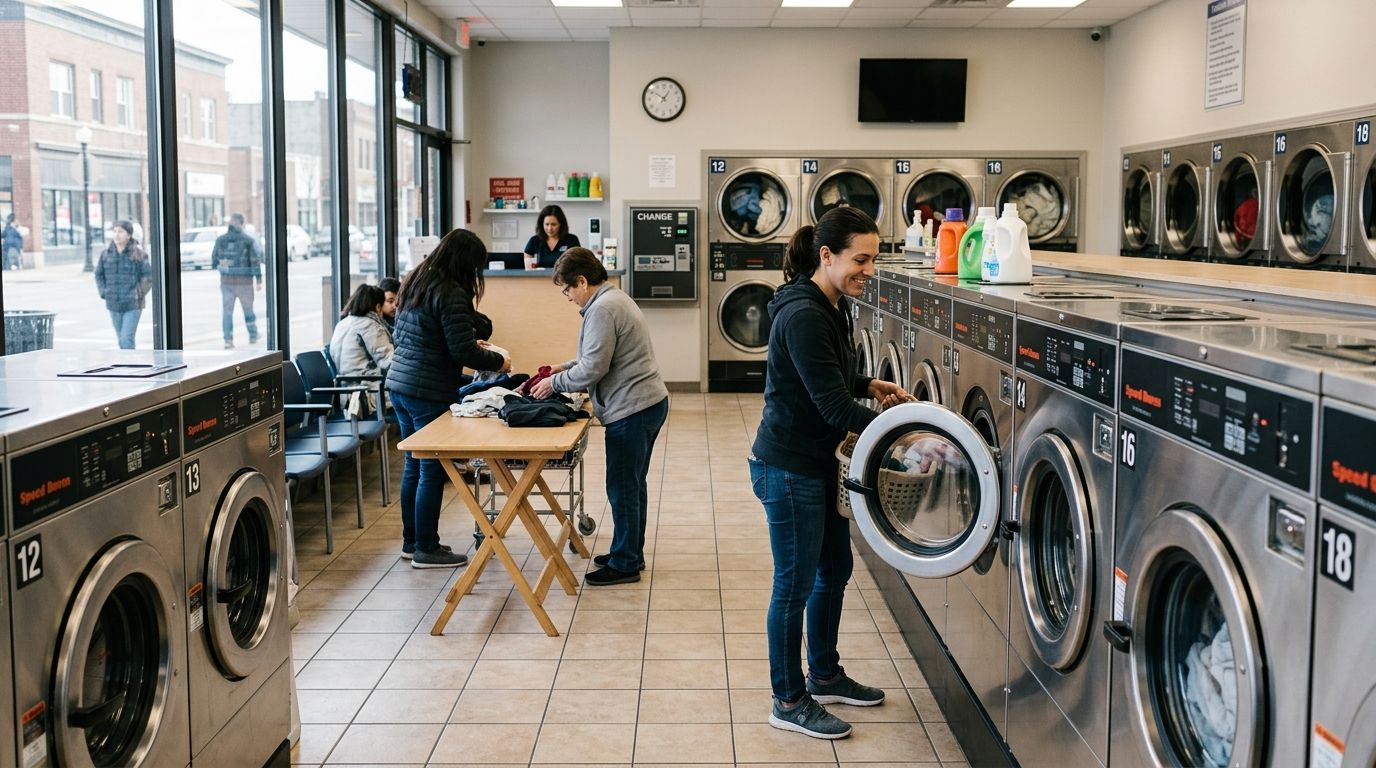
A laundromat's revenue depends on machines staying operational, and a single row of dead washers can cut daily revenue by a third until repairs finish. Lenders that don't understand coin-op and card-based laundry economics tend to underwrite laundromats like generic retail, which misses the equipment-heavy cost structure and the cash-intensive daily deposits that make laundromat bookkeeping look different from a typical storefront.
Laundromat owners searching for business loans for laundromats are usually solving one of three problems: replacing aging machines before they fail, financing a second location, or covering a utility bill spike during a slow month. Each of those problems points to a different loan product, and picking the wrong one is the most expensive mistake an owner makes in 2026.
Update your equipment inventory before you apply
Lenders want to see machine age, brand, and remaining useful life before they'll quote equipment financing terms. Do this work before you contact anyone.
List every washer and dryer by make, model, and install year
Note water and energy efficiency ratings, since newer machines lower your utility line item
Get a repair-versus-replace estimate from your service technician
Flag machines under an existing lease versus fully owned
Estimate the total replacement cost for the units you'll finance
Build a cash flow case a lender can underwrite
Laundromats run on cash and card swipes, and lenders want to see that revenue is consistent, not just present. Pull together the documentation that proves it.
Twelve months of bank deposits, reconciled against machine cycle counts if you track them
Utility bills for the same period, since water and gas costs swing with volume
Lease or mortgage statements for the physical location
A simple profit-and-loss statement, even a spreadsheet version, for the trailing year
Any existing loan or lease balances tied to current machines
Once your documentation is in order, the faster path is working with a funding partner that already knows how laundromat cash flow reads to a lender. Trifecta Business Group reviews this same file and routes it toward the lenders most likely to approve it, which shortens the back-and-forth that eats weeks when you apply cold.
Compare loan types before you pick one
Don't default to the first offer that lands in your inbox. Laundromat owners overpay when they take a merchant cash advance for what should have been term equipment financing.
Match the loan term to the asset life — a five-year loan for a machine with a ten-year lifespan wastes leverage
Check whether the lender requires a blanket lien on the business or just the equipment
Confirm whether early payoff carries a penalty
Ask if the rate is fixed or tied to a variable index
Compare total cost of capital, not just the monthly payment
Prepare your laundromat's financial documents
Most laundromat funding applications stall because paperwork is incomplete, not because the business doesn't qualify. Get ahead of it.
Two years of business tax returns
Personal financial statement for each owner with 20%+ equity
Current lease agreement with remaining term
Equipment purchase quotes or invoices
Business license and any laundromat-specific permits
Choose between SBA, equipment financing, and working capital
This is the decision point where most owners need a second opinion. An SBA loan fits a full laundromat acquisition or a ground-up buildout because the terms stretch long enough to match the payback period on a full machine room. Equipment financing fits a partial replacement — say, eight new dryers — because the machines themselves secure the loan and approval turns around faster than SBA underwriting.
A working capital shortfall is different from an equipment need, and treating it the same way costs owners money every year.
Manage cash flow between funding cycles
Laundromats see revenue dips during summer months in cooler climates and spikes during back-to-school and holiday travel weeks. A business line of credit smooths those swings without forcing a new loan application every time a utility bill runs high.
Draw only what you need for the specific gap, not the full credit line
Repay the balance before the next seasonal dip to keep the line available
Track utility costs against draws so you can see which months actually need the buffer
Keep the line separate from equipment debt so you don't blend repayment schedules
Owners who install app-based payment systems and remote machine monitoring in 2026 are also weighing labor savings against setup cost, and that math runs the same way as comparing a loan payment against the revenue an upgraded machine room generates — a point covered in more detail when owners research the cost of automation tools for small operations.
Negotiate terms before you sign
Rates and terms on laundromat funding are rarely final on the first offer. Push back on the parts of the deal that matter most.
Ask for a rate reduction if you can show 12+ months of consistent deposits
Negotiate the prepayment penalty down or out entirely
Request a payment schedule that lines up with your slowest months
Confirm whether the lender reports payment history to business credit bureaus
Comparing funding options for laundromats
Option
Best for
Key limitation
SBA 7(a) loan
Full laundromat purchase or buildout
Slower approval, heavier documentation
Equipment financing
Replacing washers and dryers
Only covers the equipment, not utilities or rent
Business line of credit
Seasonal utility and cash gaps
Requires discipline to repay between draws
Working capital loan
Short-term cash flow shortfalls
Shorter terms mean higher monthly payments
Merchant cash advance
Fast cash with weak credit history
Daily or weekly repayment strains thin margins
“A laundromat with a dead row of dryers loses revenue faster than almost any other retail business, which is why equipment financing terms matter more than the headline rate.”
Common mistakes laundromat owners make
Financing machines with a merchant cash advance. Daily repayment schedules drain the cash a laundromat needs for coin change and utility payments.
Underestimating utility cost swings. Owners apply for a fixed loan amount without building in a buffer for summer water rate increases.
Skipping the equipment inventory step. Lenders reject applications when they can't verify what's being financed or its remaining useful life.
Mixing personal and business bank accounts. Coin-heavy businesses already look inconsistent to underwriters; commingled accounts make it worse.
Waiting until a machine fails to apply. Reactive financing applications get worse terms than proactive ones filed months ahead of expected breakdowns.
Get laundromat funding options in 2026
Talk through equipment financing, SBA, and working capital options for your location.
What is the best type of business loan for a laundromat?
Equipment financing is the best fit for replacing washers and dryers because the machines secure the loan and approval moves faster than SBA underwriting. A full laundromat purchase or buildout usually calls for an SBA 7(a) loan instead.
Can a new laundromat owner get an SBA loan?
Yes, first-time laundromat owners qualify for SBA 7(a) loans if they show a solid business plan, adequate collateral, and personal financial documentation. Lenders weigh industry experience, so a documented plan for staffing and machine maintenance strengthens the application.
How much does equipment financing cost for washers and dryers?
Cost depends on the lender, the equipment’s age, and the borrower’s credit profile, so terms vary case by case in 2026. Compare total cost of capital across at least two lenders before signing.
Is a business line of credit better than a term loan for a laundromat?
A line of credit works better for recurring seasonal gaps like summer utility spikes, while a term loan fits a one-time need like a full equipment replacement. Many laundromat owners use both at the same time for different purposes.
Do laundromats qualify for working capital loans?
Yes, working capital loans are available to laundromats with consistent deposit history, typically 12 months of bank statements showing steady revenue. Cash-heavy businesses need clean reconciliation records to qualify.
What documents do I need to apply for laundromat business funding?
Lenders typically ask for two years of tax returns, a personal financial statement, current lease terms, equipment quotes, and business licensing. Missing documentation is the most common reason applications stall.
Can I get funding to buy an existing laundromat?
Yes, SBA loans and conventional acquisition financing both cover the purchase of an existing laundromat, including its equipment and lease assignment. Lenders will review the seller’s revenue history as part of underwriting.
One last thing
The laundromat owners who get approved fastest in 2026 aren't the ones with the highest revenue — they're the ones who can hand a lender a clean equipment inventory and 12 months of reconciled deposits on the first call. Build that file before you need the loan, not after a machine breaks.
Accounts receivable financing for B2B companies in 2026: advance rates, recourse vs non-recourse, steps to qualify, and mistakes that slow down funding.
Business funding for e-commerce brands compared for 2026: revenue-based financing, credit lines, SBA loans and inventory financing, with clear buy/hold verdicts.
Business loans for dental practices in 2026 range from SBA 7(a) loans to equipment financing — see which option fits your practice and how to apply today.