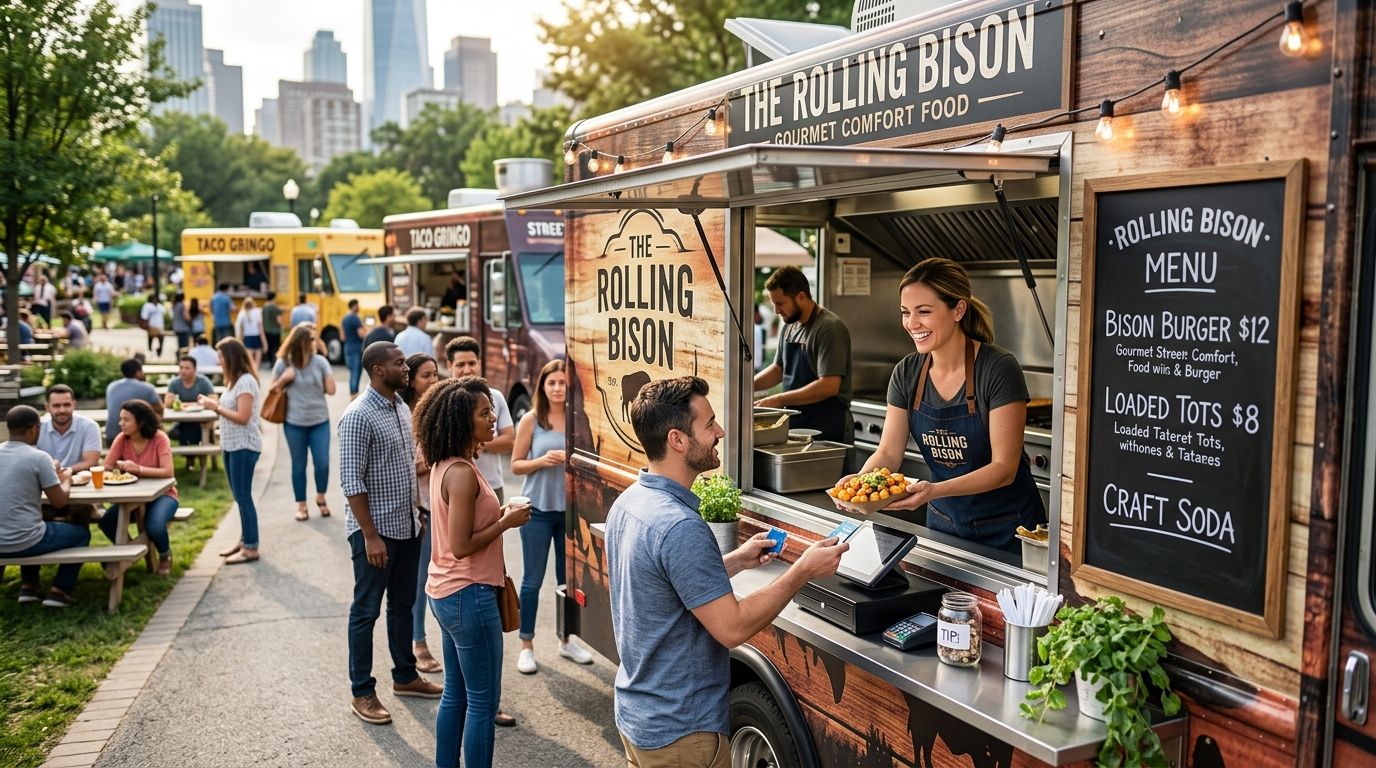
Funding solutions for food truck businesses are financing tools sized to a mobile food operation's real cash flow pattern: heavy weekends, slow weekdays, and a calendar built around festivals, not fiscal quarters. A food truck owner needs capital that matches route schedules, generator and fryer repairs, and the gap between a busy summer and a dead February — not a generic 12-month small business loan built for a storefront with steady foot traffic.
TL;DR
Food truck businesses need funding sized to seasonal cash flow, not standard 12-month loan models.
Equipment financing and merchant cash advances close the two biggest gaps: truck repairs and slow-season capital.
Trifecta Business Group matches food truck owners to funding based on route schedule and revenue pattern, not credit score alone.
SBA microloans cap at $50,000 in 2026, often too small for a full truck build-out.
Apply for funding before your slow season starts, not after cash runs low.
Funding caps to know in 2026
$50,000
SBA microloan program cap
$5 million
SBA 7(a) loan program cap
Why funding solutions for food truck businesses matter
A food truck runs on a thinner margin buffer than most brick-and-mortar restaurants because the biggest expense — the truck itself — is also the biggest single point of failure. A blown transmission or a dead generator during peak season doesn't just cost repair money, it costs every service you miss while the truck sits in a shop. That's a different risk profile than a retail storefront with fixed hours and a lease.
Food truck owners also deal with revenue that swings by season, city permit calendar, and even weather in a way most small businesses don't. A funding option built for seasonal cash flow fits that pattern better than a standard term loan with fixed monthly payments regardless of whether you're parked at three festivals a week or sitting idle in a January freeze. Getting the right funding option matched to your growth stage before you apply saves months of mismatched repayment terms later.
Verdict: food truck businesses get the most usable capital in 2026 from a mix of equipment financing for the truck itself and flexible working capital for the slow months in between — not a single one-size loan.
Assess your true funding need before you apply
Most food truck owners apply for funding reactively, after a repair bill or a slow month already hit. Do this math first, on your own, before talking to any lender.
List every fixed monthly cost: commissary rental, propane, insurance, permits, and loan payments
Calculate your slowest month's revenue from the last 12 months, not your average month
Subtract fixed costs from that slow-month revenue to find your real cash gap
Separate a one-time need (new fryer, truck wrap, engine repair) from an ongoing need (payroll during a slow season)
Add a 10-15% buffer for permit renewals and unexpected city fee increases
Generic business plan templates skip the details a lender needs to underwrite a mobile food business. Build documentation that speaks directly to how a truck makes money.
Pull 12 months of point-of-sale reports broken out by month, not just an annual total
Attach your commissary kitchen agreement and current health department permits
Include your vehicle title, registration, and any existing lien information on the truck
Map your regular route or event schedule to show consistent revenue sources
List catering or private event contracts separately from daily walk-up sales
Check your credit before a lender does
A soft pull on your own credit costs nothing and tells you exactly where you stand before an application creates a hard inquiry.
Pull your personal credit report and check for errors or old collections
Review your business credit file if the truck has operated as an LLC for 12+ months
Pay down any revolving balances above 30% utilization before applying
Correct any name or address mismatches between your business and personal credit files
Compare funding types matched to food truck needs
Not every funding product fits a mobile food business the same way. Match the tool to the problem instead of applying to whichever lender ranks first in a search.
Option
Best For
Key Limitation
Equipment financing
Buying a new truck, fryer, or generator
Repayment ties to the asset, not your seasonal revenue
Merchant cash advance
Fast cash for festival season or urgent repairs
Repayment pulls from daily card sales, tighter in slow weeks
Business line of credit
Recurring costs like commissary fees and propane
Needs revenue history to get a meaningful credit limit
SBA microloan
New owners needing under $50,000
Approval and funding often take 30-60+ days
Seasonal working capital loan
Bridging revenue gaps between peak and off-season
Structured around a season that may not match your event calendar
A merchant cash advance moves fast when a festival weekend is three days out and the truck needs a part today. Equipment financing makes more sense when you're buying the truck itself or a major piece of kitchen equipment, since the loan term stretches over the life of the asset instead of a few months. A business line of credit works best as a standing buffer you draw from during slow weeks and repay once revenue picks back up.
Time your application around your slow season, not your busy one
Applying for funding while cash is tight and revenue is down is the single most common mistake food truck owners make.
Apply 60-90 days before your historically slowest month, while your books still show strong recent revenue
Avoid applying during a cash crunch, when lenders read recent bank statements as risk signals
Build the application timeline around permit renewal dates so you're not juggling two deadlines at once
Line up equipment financing before a truck breaks down, not after it's already off the road
Structure repayment around your real cash flow calendar
A loan with the wrong repayment schedule can turn a good funding decision into a cash flow problem within a few months.
Ask every lender directly how repayment frequency works: daily, weekly, or monthly
Match repayment timing to your slowest and busiest weeks, not a generic 30-day cycle
Confirm whether early payoff carries any additional cost before signing
Keep a 60-day operating reserve separate from loan proceeds, even after funding lands
“Apply 90 days before your slowest month, not 9 days after it starts.”
Common mistakes food truck owners make with funding
Applying for a standard term loan sized for storefront revenue — food truck income doesn't move in a straight line, and a fixed monthly payment during a slow month creates unnecessary strain
Financing the truck and the equipment separately at different times — this often means paying two sets of fees and juggling two repayment schedules instead of one
Waiting until a repair bill hits before applying for equipment financing — reactive applications get rushed underwriting and fewer terms to compare
Skipping the commissary agreement and permit documentation — lenders read incomplete paperwork as a red flag on a business that's harder to underwrite, not a business that's simply informal
Ignoring seasonal cash flow entirely in the loan application — a lender who understands your actual revenue pattern structures better terms than one working off a generic annual average
Trifecta Business Group works through funding solutions for food truck businesses by starting with the revenue calendar, not a generic credit checklist. The goal in 2026 is matching the funding type to the season, the asset, and the actual gap — not pushing whichever product closes fastest.
Get funding built for your truck’s schedule
Talk through your options with a funding specialist today.
What’s the best funding option for a new food truck in 2026?
Equipment financing is typically the best fit for buying the truck itself, since repayment stretches over the asset’s working life instead of a short 6-12 month term. New owners needing under $50,000 may also qualify for an SBA microloan.
Is a merchant cash advance better than a business loan for a food truck?
A merchant cash advance moves faster and works well for short-term needs like festival season repairs, but it repays from daily sales rather than a fixed monthly payment. A term loan or line of credit usually costs less over time if you don’t need cash within days.
How much does it cost to get funding for a food truck business?
Cost depends on the funding type, amount, and your credit and revenue history, so figures vary lender to lender. Compare written offers directly rather than relying on any single published rate.
Can a food truck qualify for an SBA loan?
Yes, food truck businesses can qualify for SBA microloans up to $50,000 or larger SBA 7(a) loans up to $5 million in 2026, depending on documentation and revenue history. Approval timelines typically run longer than alternative financing.
What documents do I need to apply for food truck funding?
Lenders typically want 12 months of point-of-sale revenue reports, your commissary kitchen agreement, current health permits, and the vehicle title. Having these ready before applying speeds up underwriting.
How do seasonal working capital loans work for food trucks?
A seasonal working capital loan provides capital matched to your slow months so repayment can flex around your busiest and slowest weeks. It bridges the gap between peak festival season and a slow winter.
Should I finance the truck and the kitchen equipment together or separately?
Financing them together under one equipment loan usually means one repayment schedule and fewer fees than splitting the truck and equipment across two lenders. Ask any lender directly whether they will bundle both.
When should a food truck owner apply for funding?
Apply 60-90 days before your historically slowest month while recent revenue still looks strong on your bank statements. Waiting until cash is already tight makes approval harder and terms worse.
One last thing
The SBA microloan program caps out at $50,000 in 2026 — enough for a used truck refresh or a kitchen equipment upgrade, but often short of what a full truck build-out actually costs. Food truck owners who need more than that usually combine an equipment loan with a smaller working capital line to cover the gap, rather than forcing one loan to do both jobs.
Best funding for dental practice expansion in 2026: compare SBA loans, dental business loans, equipment financing and lines of credit before you apply.
Business loans for salons and spas compared for 2026: working capital, equipment financing, MCA, line of credit, and SBA loans, with fit and limitations for each.
Funding solutions for healthcare startups compared for 2026: loan amounts, timelines, and clear buy/consider/skip verdicts on every option, with next steps.
Funding solutions for solar installation companies in 2026: equipment financing, working capital, and credit lines matched to the 60-90 day install-to-payout gap.